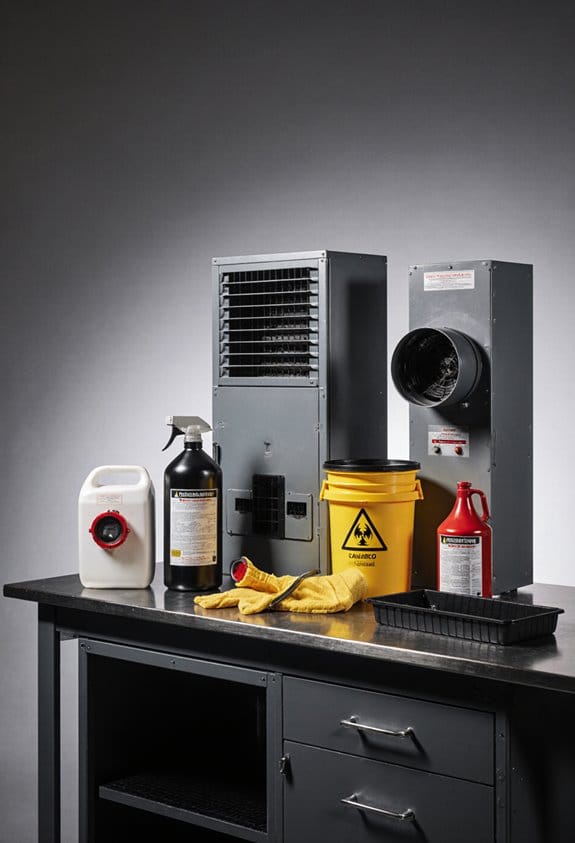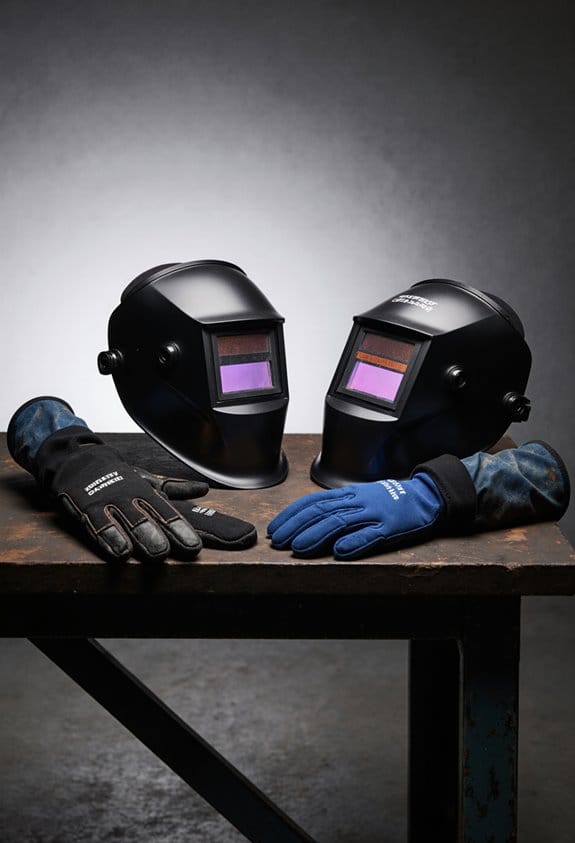


When you’re out in the garage, safety’s not just a good idea; it’s a must. Ever slipped on a wet floor while working on a project? It can be a real headache.
That’s why wearing the right footwear is crucial. You want shoes with slip-resistant soles to keep you grounded on those slick surfaces. Plus, don’t forget about steel toe caps. They’re your best friend when heavy tools or equipment are around.
Look for shoes that have puncture-resistant designs too. You never know when you might drop something sharp or step on a nail.
Regularly taking a look around your workspace for specific hazards can make all the difference. This helps in figuring out what footwear you really need to stay protected.
So, what’s the best part? Finding shoes that meet safety standards can be easier than you think. Just remember that comfort is key too; no one wants to deal with sore feet after a long day in the garage.
In short, invest in good footwear suited for your work conditions. It’s a simple step that goes a long way in maintaining safety while you tackle those projects.
What’s the footwear you swear by when working in the garage?
Key Takeaways
- Safety footwear with slip-resistant soles reduces the risk of falls on oily and wet garage floors.
- Steel toe caps provide essential protection against potential foot injuries from heavy tools and equipment.
- Choose footwear made from chemical-resistant materials to safeguard against spills and harmful substances.
- Regular hazard assessments help identify specific risks and ensure appropriate footwear choices for garage environments.
- Education and training on proper footwear selection can significantly lower the rate of workplace accidents.
Why Safety Footwear Is Essential In Garages
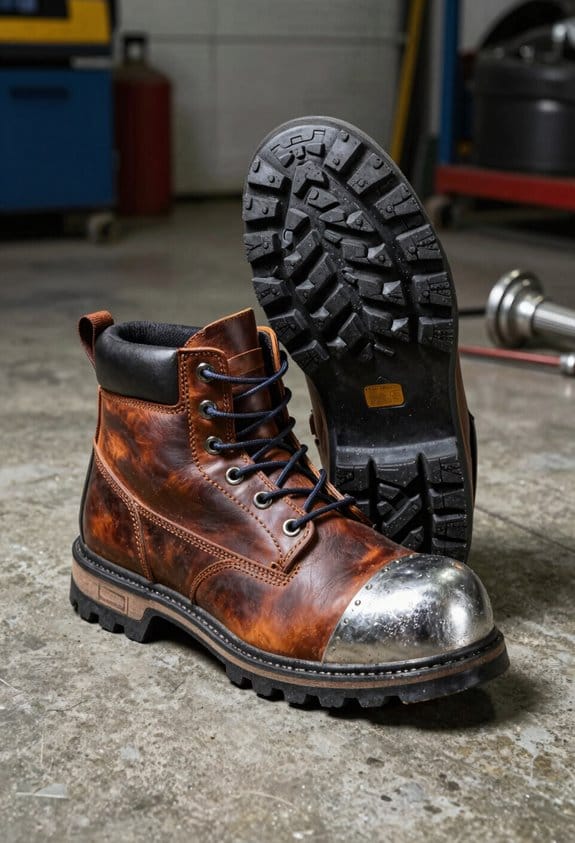
When you’re working in a garage, safety footwear might not be the first thing that comes to mind. But let’s be real: with all those heavy tools and equipment lying around, having the right shoes on can make a world of difference. Steel toe boots, for instance, protect your feet from drops and impacts. Ever accidentally kicked a tool? Trust me, it hurts.
Plus, think about slips—oil spills happen pretty often in a garage. This is where slip-resistant soles come in handy. Puncture-resistant shoes are also worth considering since they can protect you from sharp objects lurking on the floor.
So, why does this matter? It’s about more than just avoiding injuries; it’s about feeling safe and confident in your environment. You wouldn’t drive a car without a seatbelt, right? Wearing the right footwear is just as essential.
Compliance with things like OSHA standards not only helps keep you safe but gives peace of mind. Remember, when you prioritize safety, it creates a better work atmosphere for everyone involved. The best part is, investing in the right safety footwear can seriously boost your morale too. Always look for ASTM F2413 certification to ensure your boots meet essential safety standards.
Recommended Products
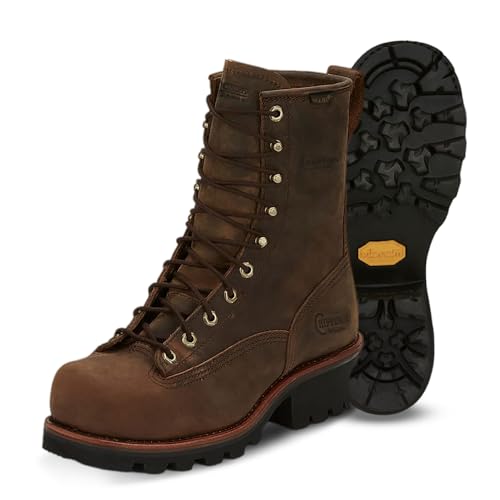
Rugged Waterproof Durability: The Chippewa Paladin Logger Work Boots feature full-grain leather construction with a waterproof design, ensuring resilience in wet conditions. Tailored for men's industrial & construction boots, they exemplify dependability in challenging environments

AMERICAN MADE men’s work boots made in the USA with USA and globally sourced components

Lighter weight with cool comfort in warmer temperatures, our unlined leather boots will mold perfectly to your foot.
Risks of Not Wearing Safety Footwear

Skipping safety footwear is a risk that can really hurt you—literally. Picture this: you’re in a busy workplace, tools are dropping left and right, and without protective shoes, those accidents can do some serious damage to your feet. We’re talking about pain that can linger for months or even lead to long-term disability.
Then there’s the slippery floors. Honestly, how many times have you nearly wiped out because of a wet surface? Without the right shoes, a slip can result in a nasty fall that’ll sideline you for a while. That means recovery time you can’t afford to waste.
And if you think that’s it, consider this—working around electrical systems without steel-toed shoes opens you up to potential shocks. Plus, doesn’t the idea of exposing your feet to harmful chemicals sound scary? Trust me, burns from spills are no picnic.
It’s clear: not wearing safety footwear can lead to missed work days and lost productivity. Foot injuries contribute to about 15% of all workplace accidents. So, what can you do? Make sure you’re wearing the right footwear for the job.
At the end of the day, your feet need protection. Shoes with ASTM F2413 safety standards ensure you have reliable foot protection that meets industry requirements. Ask yourself: is it worth the risk? You’ve got this—stay safe and keep moving forward!
Recommended Products

NFPA 1951, NFPA 1971, NFPA 1977, NFPA 1990(1992), ASTM F2413 & CAN/CSA-Z195 certified

10 inch tall 2.8mm thick full grain leather uppers

NFPA 1971, NFPA 1990(1992), ASTM F2413 & CAN/CSA-Z195 certified
Essential Characteristics Of Ideal Garage Footwear
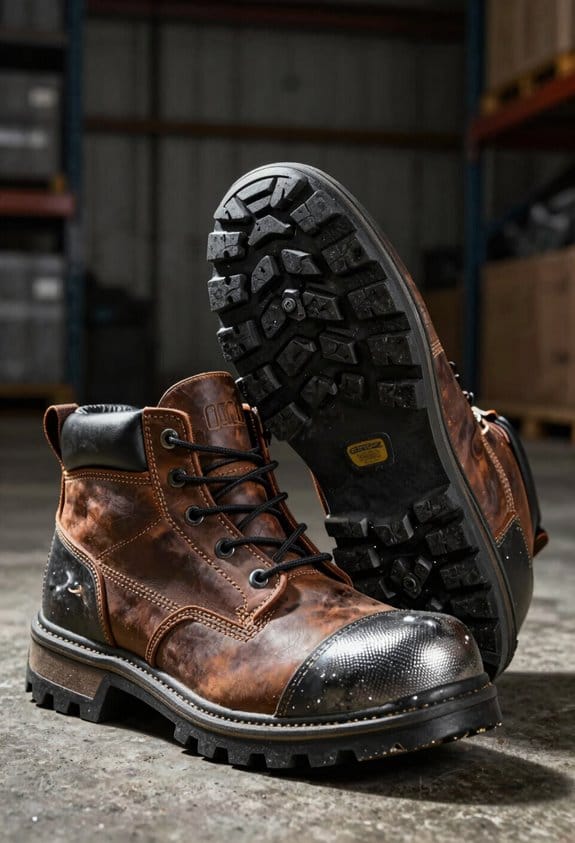
Ever stubbed your toe on a heavy tool or slipped on a wet floor while working in the garage? It’s not just annoying; it can lead to serious injuries. That’s why choosing the right garage footwear is more important than you might think.
Think about it: You need shoes that really get the job done when you’re surrounded by heavy machinery and spills. Here are some essentials to keep in mind when you’re shopping for that perfect pair:
- Look for slip-resistant soles. Shoes with SRC technology offer the best grip when the floor gets oily or wet.
- Steel toe caps are a must. They protect your feet from falling objects or heavy tools that could cause serious damage.
- Consider chemical-resistant materials, especially if you’re dealing with oils or solvents. You don’t want your new kicks to suffer from a spill!
Also, don’t underestimate the comfort factor. Energy-absorbing soles can keep you on your feet longer without feeling worn out. If you’re working around electrical equipment, insulated shoes are crucial to avoid electric shocks.
For added assurance, make sure your boots comply with recognized ASTM safety standards to guarantee reliable protection.
Truth is, investing in quality safety footwear isn’t just about compliance—it’s about protecting yourself. When you’re focused on the task at hand, the right shoes can make all the difference in comfort and safety.
Common Hazards Affecting Garage Foot Safety
Ever had a close call in the garage because of something underfoot? It’s all too easy to overlook the hazards lurking there that can threaten your foot safety. Heavy machinery poses a risk, with heavy items potentially falling and crushing your toes. That’s why it’s essential to gear up with safety footwear, especially those with steel toes.
Now, think about the greasy spots on the floor. Oil spills can turn the most mundane task into a slip-and-fall disaster. Wearing shoes with slip-resistant soles can really help in keeping you upright. It might seem basic, but trust me, those extra grips can make all the difference.
And let’s not ignore those sharp tools and metal parts scattered about. They can easily puncture unprotected feet, so this is where puncture-resistant soles step in. And honestly, who wants to deal with an injury that could’ve been avoided with the right footwear?
Electrical hazards are also something you shouldn’t take lightly. In a garage, you may encounter situations where a short circuit could lead to shocks. Wearing insulated footwear is a smart way to protect yourself against those unexpected surprises.
To keep things clear, it’s not just about being safe; it’s about meeting OSHA regulations too. Make sure your footwear meets the approved safety standards. This isn’t just about looking out for yourself; it’s about creating a safer workspace overall. Choosing footwear with composite toe protection can provide both lightweight comfort and reliable defense in varied industrial environments.
What Are The Safety Standards For Shop Footwear?
When you’re working in a shop, having the right footwear isn’t just about comfort; it’s about safety. So how do you know if you’re protected? It’s crucial that your shoes meet safety standards like ASTM F2413. This standard ensures your footwear has a safety toe cap that can handle a 50-pound drop and stand up to 2,500 pounds of compression. That’s some serious protection!
Another feature to look for is slip-resistant soles. If you’re in a space where liquids like oil or chemicals are present, this is especially important. You definitely don’t want to be worrying about slipping while you’re focused on your tasks. Understanding the EN ISO 20345 regulation is also key, as it lays out the minimum requirements for protective footwear. Employers should regularly assess the risks in the workplace to figure out what’s appropriate for their workers.
So, why does all this matter? Because the right footwear can significantly lower the risk of injuries, keeping you safe on the job. As you look for shoes, consider these aspects closely. They could really make a difference in preventing accidents. Truth is, by following these guidelines, you can create a safer working environment in garages and workshops.
Additionally, choosing boots with high arch support can improve comfort and reduce foot strain during long work hours.
To sum it up, choose footwear that complies with safety standards and fits your work environment. Are you ready to put your best foot forward when it comes to safety?
Recommended Products

NFPA 1971, NFPA 1990(1992), ASTM F2413 & CAN/CSA-Z195 certified

FULL-GRAIN LEATHER boots women can depend on. Tested six ways, ours is the strongest, most durable form of leather. The lightweight, supportive Trailguard TPU shank provides stability on rough, uneven terrain

10" tall leather uppers made from 2.8 mm full grain leather feature double and triple stitching throughout for added durability
Best Practices For Ensuring Foot Safety In Garages
Foot safety in garages is something we can’t ignore if we want to avoid injuries and keep things running smoothly. Have you ever thought about how many slips and falls could be prevented with the right footwear? It’s crucial to have shoes with slip-resistant soles, especially on those greasy or wet surfaces we often deal with.
Now, don’t forget to check your safety footwear regularly. Pay special attention to the toe caps; they should meet the ASTM F2413 standards. If you’re working in a place where spills are common, opting for waterproof safety footwear is a smart move—it not only keeps you protected but also comfortable during your long hours.
Here’s a trick: implementing foot safety training can really open people’s eyes to how important their footwear choices are. Being aware of the specific hazards in a garage environment is key. Plus, running routine hazard assessments can help pinpoint areas that pose a risk for toe injuries.
Additionally, choosing boots with ASTM slip resistance standards ensures better traction and safety on slick garage floors.
Frequently Asked Questions
What Are Some Foot Injuries Which Could Occur in a Workshop?
Did you know 15% of workplace accidents involve foot injuries? In workshops, we risk sprained ankles, crushed toes, puncture wounds, electrical shocks, burns, and slips on slippery surfaces without proper protective footwear.
What Does OSHA Say About Steel-Toe Shoes?
OSHA’s steel toe regulations stress protective footwear standards for workplace safety. We benefit from safety shoes that prevent injuries, while debunking steel toe myths. Meeting compliance requirements guarantees our safety in hazardous environments.
What Type of Footwear Should Be Worn to Reduce the Risk of Slips and Falls on Wet Surfaces?
To reduce slip risks, we should wear footwear with non-slip soles, waterproof materials, and effective tread patterns. Ankle support and comfort features also meet safety standards, ensuring we stay safe on wet surfaces.
What Hazards May Be Present if Safety Shoes Boots Are Required in Your Area?
We face a delightful array of hazards without proper footwear standards, including impact resistance, puncture protection, electrical hazards, heat resistance, and toe protection. It’s essential we guarantee our safety with the right boots to thrive!